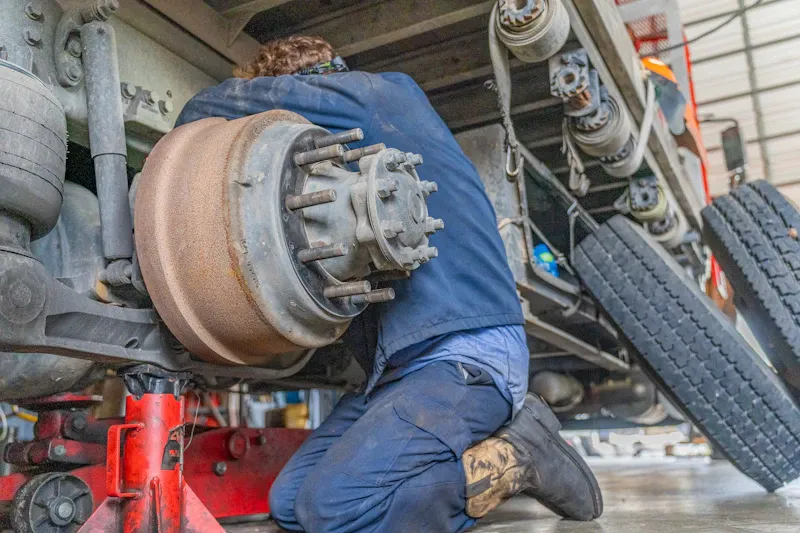
Brake problems often develop gradually, making them difficult to detect during day-to-day operation. A slight air leak, uneven brake wear, or a sticking component may not affect performance immediately, but these seemingly minor issues can quickly turn into costly repairs if ignored.
Understanding why brake problems are overlooked helps owner-operators and fleet managers protect their trucks, improve safety, and reduce repair costs.
Minor Brake Problems Often Develop Slowly
Many commercial truck brake problems begin with gradual wear rather than sudden failure. Brake linings naturally wear thinner over time, air system components age, and moving parts experience constant stress during every trip. Because these changes happen slowly, drivers often adapt without realizing braking performance has changed.
A truck may require slightly more stopping distance or feel different under braking long before an obvious problem appears. These subtle changes are easy to dismiss, especially during busy schedules. Routine inspections allow technicians to measure brake wear and identify developing issues before they affect safety or damage additional components.
Small Air Leaks Can Become Major Repairs
Heavy-duty trucks rely on air brakes, making the air system just as important as the brake components themselves. Even a small leak can reduce braking efficiency and place unnecessary strain on the air compressor.
Leaks commonly develop around fittings, hoses, valves, or brake chambers as components age. While a minor leak may seem insignificant at first, it can eventually create pressure loss, longer compressor run times, and unnecessary wear throughout the braking system.
Drivers travelling I-90, I-390, and surrounding highways near Rochester should never ignore air leaks or low air pressure warnings. Addressing these issues early helps prevent more expensive repairs and improves braking performance.
Why Do Small Air Leaks Turn Into Major Brake Repairs?
Small air leaks force your truck's air compressor to work harder to maintain system pressure, accelerating wear on compressors, valves, and other air brake components. Repairing a minor leak early is typically far less expensive than replacing multiple damaged air system components later.
Can I Drive With a Small Air Leak in My Truck's Brake System?
While a truck may still operate with a minor air leak, continued pressure loss can reduce braking performance and increase the risk of DOT violations or unexpected breakdowns. Any air leak should be inspected and repaired as soon as possible.
Uneven Brake Wear Is Easy to Miss
Brake components rarely wear at exactly the same rate. A sticking slack adjuster, seized S-cam, worn bushing, or improperly functioning brake assembly may cause one wheel position to do more work than the others.
Because the truck still stops, many drivers never notice the imbalance until technicians perform a brake inspection. Meanwhile, the overworked brake components continue wearing faster while additional heat places stress on nearby parts.
Regular brake inspections allow technicians to compare brake wear across every axle, ensuring problems are corrected before they damage drums, shoes, or other braking components.
Delaying Brake Repairs Often Increases the Final Repair Bill
One worn brake component rarely stays isolated. As braking performance changes, additional components begin compensating for the problem, increasing wear throughout the system.
Waiting until braking performance noticeably declines often means more components require replacement than would have been necessary if repairs had been completed earlier. Preventive maintenance remains the most cost-effective way to protect your braking system.
- Worn Brake Linings: Can wear into brake drums, turning a simple brake shoe replacement into a much more expensive drum repair.
- Leaking Wheel Seals: Oil contamination can ruin brake shoes and other friction components, requiring additional parts and labor.
- Air System Leaks: Low air pressure forces the compressor and valves to work harder, increasing wear on expensive air brake components.
- Uneven Brake Performance: Brakes that aren't functioning evenly place extra stress on other wheel ends and reduce overall braking efficiency.
Drivers Should Never Ignore Warning Signs
Commercial drivers spend more time with their trucks than anyone else, making them the first line of defence against developing brake problems. Small changes in vehicle behaviour often provide valuable clues that something requires attention.
Common warning signs include:
- Increased stopping distance
- Air pressure that builds slowly
- Audible air leaks
- Brake pulling during stops
- Unusual brake noises
- Dashboard brake warning lights
- Burning odours after braking
Reporting these symptoms early gives technicians a better opportunity to diagnose the root cause before expensive repairs become necessary. This is especially important for trucks operating throughout Rochester, Monroe County, and Western New York, where changing weather conditions can place additional demands on braking systems.
Routine Brake Inspections Save Money in the Long Run
The best way to avoid expensive brake repairs is through regular inspections and preventive maintenance. Preventive maintenance reduces the likelihood of DOT violations, unexpected roadside breakdowns, and emergency repairs.
For trucks travelling Interstate 490, Interstate 590, I-390, and the New York State Thruway, dependable brakes provide confidence every time the truck leaves the yard. If you've noticed changes in braking performance or your truck is due for service, Parfitt Tire Service proudly provides professional commercial truck brake repair.
For more information, read our article on how suspension problems increase wear and fuel costs.


